Labrador Retriever Size & Weight Chart: How Big Do They Get?
Written for general planning, not medical advice — no one at Argos Paws is a veterinarian. If something is wrong with your dog right now, call your vet or the nearest emergency clinic.
Quick answer: A full-grown Labrador Retriever typically weighs 55-80 lb (25-36 kg) and stands 21.5-24.5 in (55-62 cm) tall at the shoulder; males usually weigh 65-80 lb (29-36 kg) and females 55-70 lb (25-32 kg). Most reach their adult size by around 12-18 months.
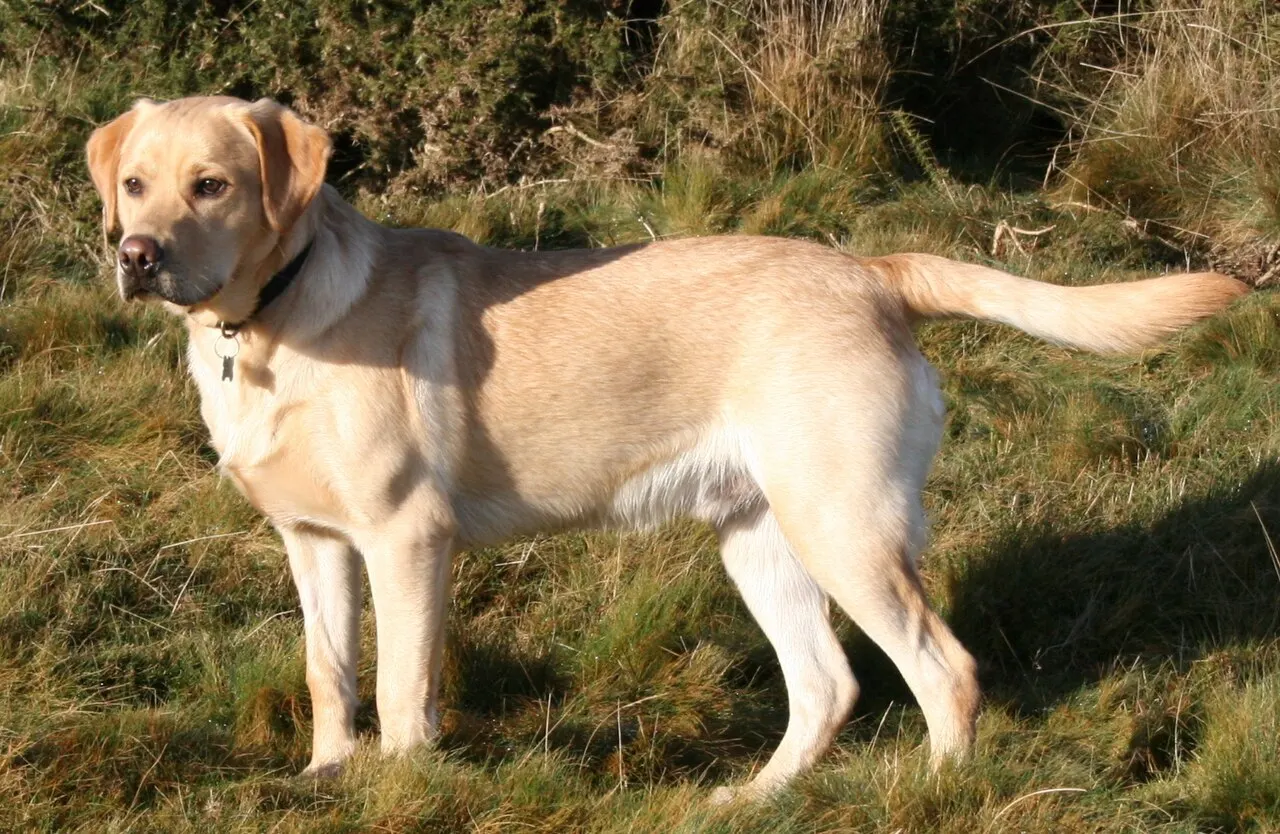
Photo: IDS.photos from Tiverton, UK · CC BY-SA 2.0 · via Wikimedia Commons
Labrador Retrievers held the title of America's most popular breed for over three decades. Friendly, food-motivated, and highly trainable, Labs are a common choice for families, service work, and hunting alike.
| Size category | Large |
|---|---|
| Typical adult weight | 55-80 lb (25-36 kg) |
| Height at the shoulder | 21.5-24.5 in (55-62 cm) |
| Full grown by | 12-18 months |
| Life expectancy | 11-13 years |
Male vs female Labrador Retriever size
| Weight | Height | |
|---|---|---|
| Male | 65-80 lb (29-36 kg) | 22.5-24.5 in (57-62 cm) |
| Female | 55-70 lb (25-32 kg) | 21.5-23.5 in (55-60 cm) |
Per the AKC breed standard. Individual dogs can sit outside these ranges and still be perfectly healthy — body condition matters more than hitting a number.
Labrador Retriever weight chart by age (lb & kg)
Estimated weights for an average Labrador Retriever puppy, based on the typical growth curve for a large breed. Males usually track toward the top of each figure, females toward the bottom.
| Age | Weight (lb) | Weight (kg) |
|---|---|---|
| 2 months | ~14 lb | ~6.4 kg |
| 3 months | ~24 lb | ~11 kg |
| 4 months | ~32 lb | ~15 kg |
| 5 months | ~41 lb | ~19 kg |
| 6 months | ~51 lb | ~23 kg |
| 9 months | ~61 lb | ~28 kg |
| 12-18 months (full grown) | 55-80 lb | 25-36 kg |
When does a Labrador Retriever stop growing?
As a large breed, Labradors keep growing until about 12-18 months, with some filling out in chest depth past that. Height usually levels off first — a Labrador Retriever can look full height at 9-12 months but keep adding chest depth and muscle for months afterward.
Use the Puppy Weight Predictor below — it's pre-loaded with the Labrador Retriever's growth curve, so just enter your puppy's current weight and age.
Predict your Labrador Retriever's adult weight
Enter your puppy's current weight and age to get an estimate based on this breed's typical growth curve.
Open the Puppy Weight PredictorHow much does it cost to feed a Labrador Retriever?
A typical adult Labrador Retriever (68 lb, average activity) needs roughly 1458 kcal/day — about 0.9 lb (3.4 cups) of dry kibble per day, which works out to around $51/month at typical kibble prices. Fresh or subscription-style food usually costs more, around $583/month for the same dog. These are population-level estimates — use the calculator below for a number based on your dog's actual weight and food type, or see the Labrador Retriever feeding chart for puppy amounts by month.
Estimate Labrador Retriever food costs
Pre-filled with this breed's typical adult weight — adjust activity level and food type to get your monthly estimate.
Open the Dog Food Cost CalculatorBrowse dog food sized for a Labrador Retriever
Compare dry, wet, and breed-specific formulas — filter by your dog's size and life stage to narrow it down.
Browse dog food on Amazon(affiliate link)How old is my Labrador Retriever in human years?
The old "×7" rule doesn't hold up — large breeds like the Labrador Retriever age at their own rate, not a generic one. Use the calculator below, pre-set to this breed's size.
Convert your Labrador Retriever's age
Pre-filled with this breed's size category for a more accurate human-year estimate than a flat multiplier.
Open the Labrador Retriever Age CalculatorCommon health considerations
- Hip and elbow dysplasia are well-documented in the breed — ask breeders for OFA or PennHIP clearances.
- Labs are prone to obesity due to a strong appetite and food-motivated temperament; portion control matters.
- Exercise-induced collapse and progressive retinal atrophy occur in some lines.
This is general breed-level information, not a diagnosis or a prediction for any individual dog. Talk to your vet about health screening and preventive care specific to your dog.
Is pet insurance worth it for a Labrador Retriever?
See a typical monthly premium for this breed and whether it would likely pay off against a major vet bill.
Labrador Retriever insurance costEstimate what coverage would cost for your dog
Premiums swing widely by breed, age, and location. Our calculator gives you a realistic range in about a minute — no email, no sign-up.
Open the pet insurance calculatorJoint supplements can help support a growing Labrador Retriever
Larger breeds carry more weight on developing joints. Many owners start a glucosamine/chondroitin or omega-3 supplement during the growth phase rather than waiting for stiffness to appear.
Browse joint supplements on Amazon(affiliate link)Similar breeds
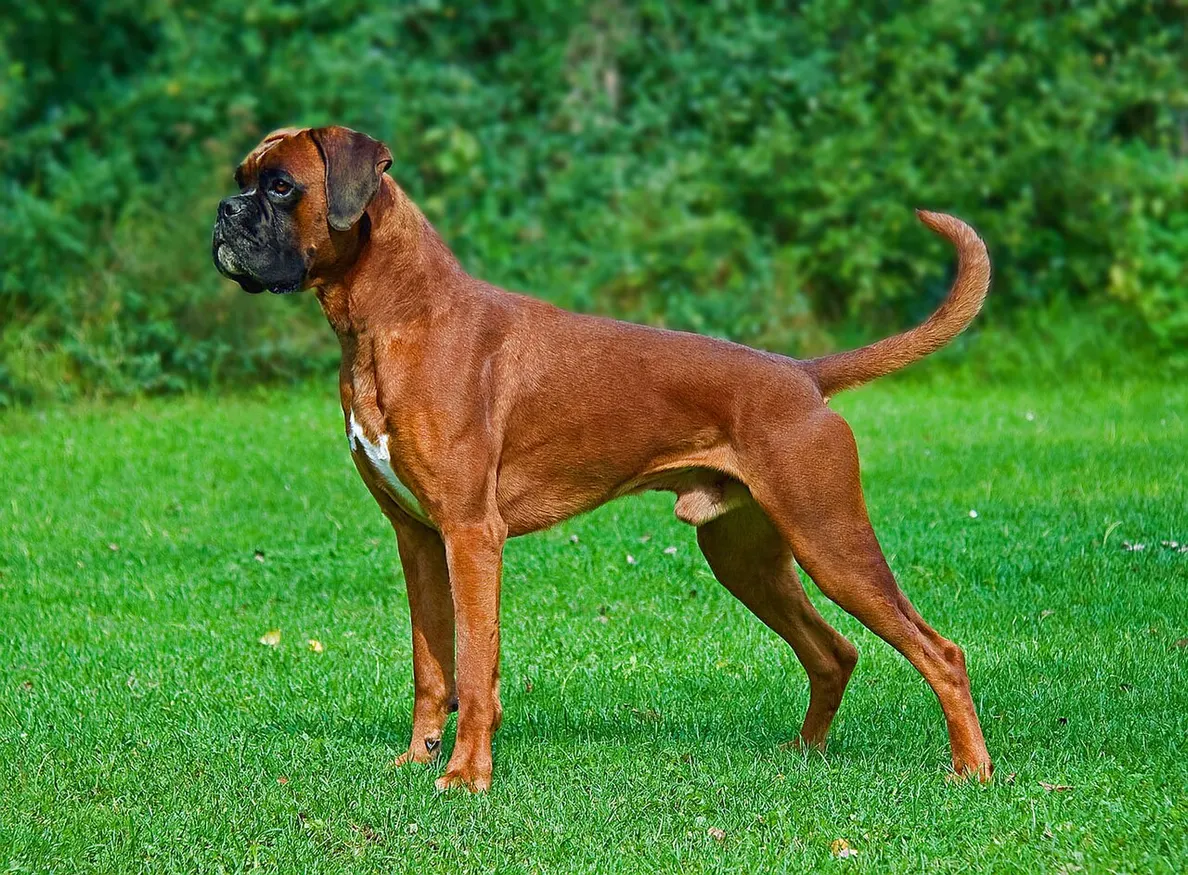
Based on energy level, living-space fit, and care needs, these breeds are closest to the Labrador Retriever:


Take our breed match quiz
Answer a few quick questions about your lifestyle and living space to see which breeds — not just the Labrador Retriever — actually fit best.
Take the Breed Match QuizFrequently asked questions
How much does a full-grown Labrador Retriever weigh?
A full-grown Labrador Retriever typically weighs 55-80 lb (25-36 kg), making it a large breed. Males usually weigh 65-80 lb (29-36 kg) and females 55-70 lb (25-32 kg). Individual dogs vary within that range depending on sex, genetics, and body condition — use the Puppy Weight Predictor above for an estimate based on your specific puppy's current weight and age.
How tall is a full-grown Labrador Retriever?
A full-grown Labrador Retriever stands 21.5-24.5 in (55-62 cm) tall, measured at the shoulder (withers). Males are typically 22.5-24.5 in (57-62 cm) and females 21.5-23.5 in (55-60 cm).
When does a Labrador Retriever stop growing?
As a large breed, Labradors keep growing until about 12-18 months, with some filling out in chest depth past that. Height typically levels off a bit before this; larger breeds like this one keep adding muscle and body mass for months after they stop getting taller.
Is a Labrador Retriever a good first dog?
Yes — the Labrador Retriever is commonly recommended as a first dog. Nothing about the breed demands specialized handling experience, which is unusual enough among dogs that it's worth calling out directly.
How much exercise does a Labrador Retriever need?
Above average — plan on 45-60 minutes of real activity most days. A short walk around the block won't be enough on its own for a Labrador Retriever.
Is a Labrador Retriever good with kids?
Yes, the Labrador Retriever is one of the more reliably kid-friendly breeds, generally patient and sturdy enough for boisterous play. Always supervise young kids with any dog regardless of breed reputation.
How much grooming does a Labrador Retriever need?
Fairly low-maintenance. Occasional brushing and the usual nail/ear/teeth care is typically enough for a Labrador Retriever.